
Dr.Wei Xiaping
Secretary of the Party Branch of the Department of Oncology and Deputy Director of the Radiotherapy Center, Jinshazhou Hospital, Guangzhou University of Chinese Medicine; Expert for Health Technology Promotion, National Health Commission; Deputy Leader of the Oncology Radiosurgery Technology Promotion Group, China National Association for Ethnic Minorities Health; Member of the International Association for the Study of Lung Cancer (IASLC); Vice Chairman of the Intelligent Medical Imaging Branch of the Guangdong Provincial Society of Biomedical Engineering; Standing Committee Member of the Medical Physics Technology Committee of the Guangdong Provincial Anti-Cancer Association; Standing Committee Member of the Radiation Oncology Committee of the Guangdong Provincial Hepatology Society; Member of the Radiation Oncology Branch of the Guangdong Provincial Medical Association; Member of the Radiation Protection Branch of the Guangdong Provincial Medical Association; Standing Committee Member and Secretary of the Oncology Radiosurgery Committee of the Guangzhou Anti-Cancer Association; Member of the Oncology Radiotherapy Committee of the China Medical Education Association; Member of the Radiotherapy Department Management Committee of the Guangdong Provincial Hospital Association; Member of the Radiation Physics Committee of the Guangdong Provincial Association of Traditional Chinese Medicine; Corresponding Editorial Board Member and Reviewer of the Chinese Journal of Medical Physics; 7th Place, China Region, 2017 International Radiotherapy Planning Competition.
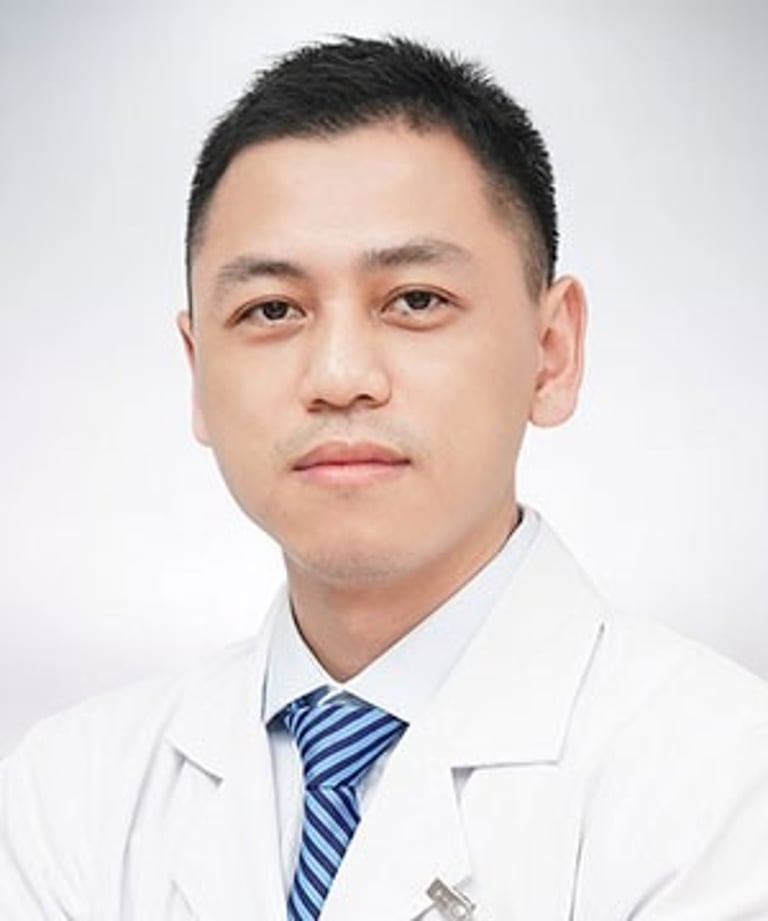
Formerly a senior radiation therapy physicist at Guangdong Provincial People's Hospital, with experience designing over 8,000 radiation therapy plans. He received advanced training in stereotactic radiosurgery and proton therapy at the Henry Ford Cancer Institute in the United States and Chang Gung Memorial Hospital in Taiwan.
Formerly a senior clinical application expert at Varian Medical Center and project manager at the Varian Radiation Therapy Center. He has trained over 300 radiation oncologists, radiation therapy physicists, and technicians.
He has participated in the National Key Basic Research and Development Program (973 Program) and the National Major Scientific Instruments and Equipment Development Project, and led the development of a PET-CT analysis software project. He was a key drafter of the National Cancer Center's "Quality Control Guidelines for Ring-Type Gantt Accelerators," chief editor of the "Varian Radiation Therapy Center Construction Guidelines," and co-author of five "Halcyon Clinical and Technical Practice Series Guidelines." He has published over 10 academic papers both domestically and internationally.
Specialties: Precision radiotherapy, tumor respiratory and motor control, stereotactic radiotherapy, proton therapy.
Jinshazhou Hospital of Guangzhou University of Chinese Medicine
Precision radiotherapy equipment connected with leading global oncology experts
Navigation
Contact With Us
Email:info@jinshazhouhospitaloncology.com
Email:info.jinshazhouhospital@gmail.com
Tel:+8619128606651
Wechat:+8619128606651
(C) 2026 CancerFixed International Oncology Navigation - Providing borderless access to precision oncology technologies and clinical evidence-based guidance.

